Silver has been used for centuries to make jewellery, utensils, decorative items, religious articles, coins, and gifts. However, not every product that looks like silver is made from pure silver. German silver and pure silver are two materials that are often confused because they can look quite similar.
The main difference is simple: German silver does not contain actual silver, while pure silver is made almost entirely of the metal silver. Their composition, price, durability, appearance, maintenance, and value are very different.
If you are planning to buy jewellery, utensils, decorative products, or silver gifts, understanding these differences can help you make a better and more informed decision.
In this guide, we will explain German silver vs pure silver, including their composition, appearance, durability, price, uses, benefits, disadvantages, and how to identify them.
What Is German Silver?
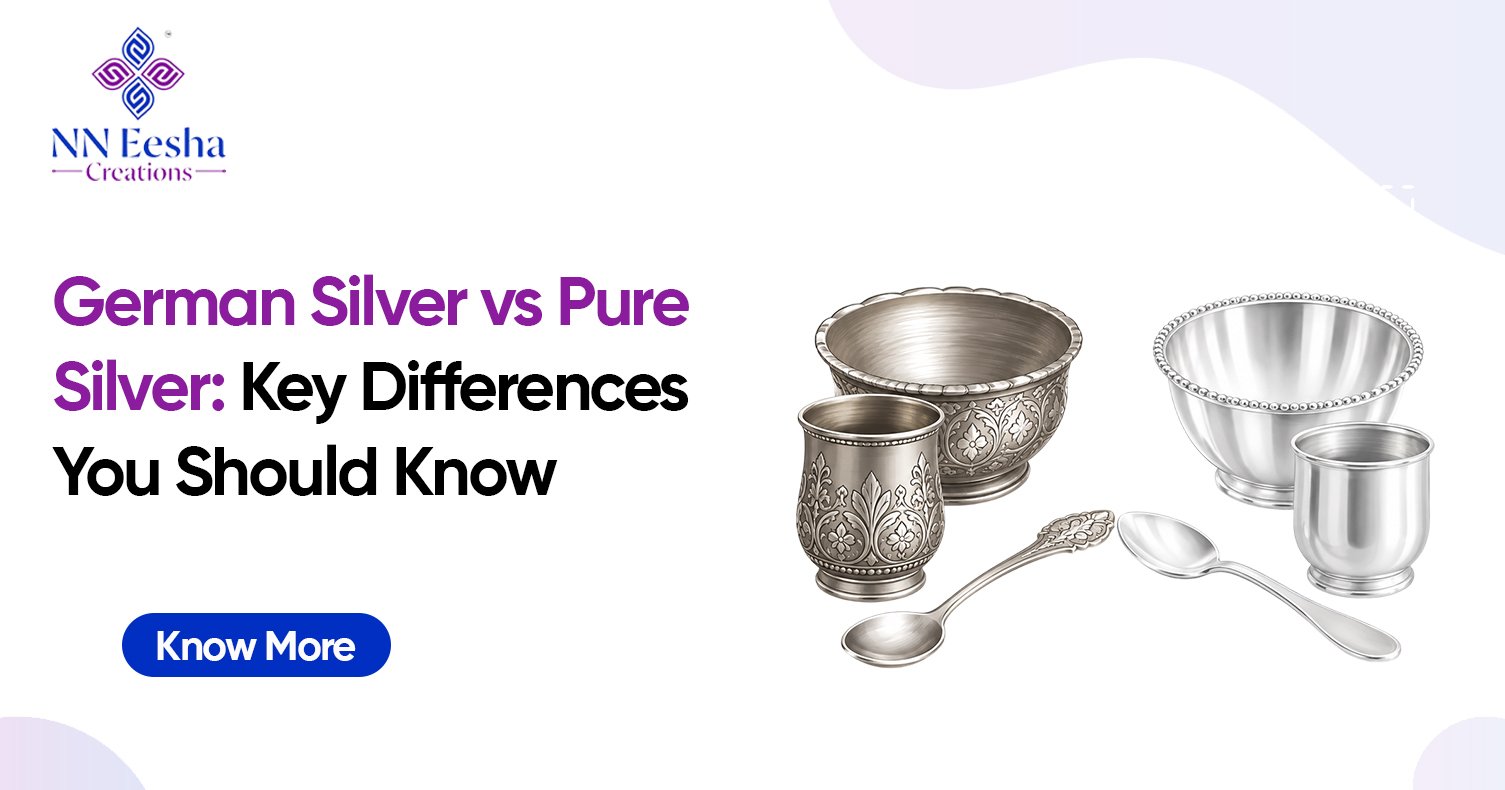
German silver is a metal alloy made mainly from copper, nickel, and zinc. Despite its name, it generally contains no actual silver.
It is also known by names such as nickel silver or alpaca silver. The material was developed as a silver-looking alternative that could provide a similar appearance at a lower cost.
German silver is popular for making decorative products, artificial jewellery, utensils, handicrafts, showpieces, cutlery, and other items.
Its bright, silver-like appearance makes it attractive, especially when the product is polished properly.
Common Characteristics of German Silver
- It does not normally contain real silver.
- It is mainly made from copper, nickel, and zinc.
- It is more affordable than genuine silver.
- It has a bright, silver-like appearance.
- It is generally harder than pure silver.
- It can tarnish or lose its shine over time.
What Is Pure Silver?
Pure silver refers to silver with a very high silver content. Fine silver is generally 99.9% silver, often represented as 999 silver.
Because pure silver is a soft metal, it is not always ideal for everyday jewellery or products that need high resistance to bending and scratching.
For jewellery, you may commonly encounter sterling silver, which contains about 92.5% silver and other metals, usually copper, to improve strength. Sterling silver is different from pure silver and should not be described as 100% silver.
Pure silver has a natural white metallic appearance and is considered a precious metal. Its value is connected not only to the finished product but also to the silver content and prevailing silver market prices.
German Silver vs Pure Silver: Main Differences
The easiest way to understand these materials is to compare their important characteristics.
|
Feature |
German Silver |
Pure Silver |
|
Actual silver content |
Generally none |
About 99.9% |
|
Main composition |
Copper, nickel and zinc |
Silver |
|
Precious metal |
No |
Yes |
|
Appearance |
Silver-like |
Natural silver appearance |
|
Price |
Usually much lower |
Much higher |
|
Durability |
Generally harder |
Relatively soft |
|
Tarnishing |
Can tarnish |
Can also tarnish, but behaves differently |
|
Resale value |
Generally very low |
Has precious-metal value |
|
Investment value |
No |
Yes, depending on market and purity |
|
Common uses |
Decorative items, artificial jewellery, handicrafts |
Jewellery, coins, utensils, investment and religious items |
1. Difference in Composition
Composition is the biggest difference between German silver and pure silver.
- German silver is an alloy containing metals such as copper, nickel, and zinc. The exact composition can vary depending on the manufacturer and application.
- Pure silver, on the other hand, contains approximately 99.9% silver when it is sold as fine silver.
- This difference in composition affects almost everything else, including price, softness, weight, appearance, and value.
2. Difference in Appearance
At first glance, German silver and pure silver can look quite similar.
- German silver has a bright, shiny appearance that resembles genuine silver. This is one reason it is widely used in decorative products and artificial jewellery.
- Pure silver has a naturally bright, white metallic appearance. With regular use, it may develop tarnish because silver can react with substances in the surrounding environment.
- Therefore, appearance alone is not a reliable way to determine whether an item is made from genuine silver.
3. Difference in Price
Price is another major difference.
German silver is significantly cheaper because it does not contain precious silver. Its price mainly depends on the materials, workmanship, design, brand, and manufacturing process.
Pure silver costs more because silver itself is a precious metal. The final price of a silver product can depend on several factors, including:
- Silver purity
- Current silver market price
- Product weight
- Making charges
- Design complexity
- Brand or seller
- Taxes and other applicable costs
If a product is being sold as pure silver, it is important to check its purity and authenticity rather than relying only on its appearance.
4. Difference in Durability
- Pure silver is relatively soft. This makes it easy to shape and work with but also means that pure silver products can scratch, bend, or develop marks more easily.
- German silver is generally harder because it is an alloy containing other metals. This can make it suitable for products that need more structural strength.
- However, durability does not mean German silver has greater financial value. A harder metal can be useful for everyday products, while genuine silver has the added value of being a precious metal.
5. Difference in Resale Value
- German silver generally does not have the same resale value as genuine silver because it does not contain significant amounts of precious silver.
- Pure silver has an inherent metal value. If an item is genuinely made from high-purity silver, its v\qbalue can be assessed partly based on its silver content and the prevailing market price.
- However, the resale value of a finished silver product may not equal the original purchase price. Making charges, design costs, taxes, and dealer margins may not be fully recovered.
6. Difference in Maintenance
Both materials need proper care, but their maintenance requirements can differ.
German silver products may lose their shine, develop discoloration, or show surface changes depending on the alloy and finishing. Regular cleaning and keeping the item dry can help maintain its appearance.
Pure silver can also tarnish over time. Storing silver in a dry place and limiting exposure to chemicals, moisture, perfumes, and household cleaning products can help reduce tarnishing.
For valuable silver jewellery or antique items, it is better to follow the manufacturer's care instructions rather than using harsh cleaning methods.
Is German Silver Real Silver?
No. German silver is generally not real silver.
- The name can be misleading because the material looks like silver. German silver is primarily an alloy of metals such as copper, nickel, and zinc.
- This is why buyers should carefully read product descriptions before purchasing an item advertised as German silver.
- If you specifically want a product made from genuine silver, look for clear information about its silver purity.
Is Pure Silver Better Than German Silver?
There is no single answer because it depends on what you need.
If your priority is precious-metal value, authenticity, and silver content, pure silver is the better choice.
If your priority is affordability, appearance, and a relatively durable material for decorative use, German silver may be suitable.
For example, someone buying an inexpensive decorative item may be perfectly satisfied with German silver. Someone purchasing silver as a valuable gift or precious-metal asset should carefully verify genuine silver purity.
How to Check Whether Silver Is Genuine
Do not depend on a single home test when purchasing expensive silver. Some useful checks include:
Look for Hallmarks
Genuine silver products may carry purity marks. For example, 999 commonly indicates 99.9% silver, while 925 generally indicates sterling silver.
In India, buyers should also look for appropriate BIS hallmarking and purity information where applicable. Hallmarking requirements can vary by product and applicable regulations, so verify current requirements when making a significant purchase.
Ask for a Bill
Always request a proper invoice when buying valuable silver. The bill should clearly mention relevant details such as the product, weight, purity, and applicable charges.
Buy From a Reliable Seller
Choose an established jeweller or seller with transparent product information and clear return or exchange policies.
Avoid Relying Only on Visual Tests
Colour, weight, magnet tests, and other basic home methods may provide clues but should not be treated as conclusive proof of silver purity.
For high-value purchases, professional testing is a safer option.
Advantages and Disadvantages of German Silver
Advantages
- Affordable compared with genuine silver
- Attractive silver-like appearance
- Generally harder than pure silver
- Suitable for decorative products
- Available in many designs
- Useful for affordable fashion jewellery
Disadvantages
- Generally contains no actual silver
- Does not have precious-metal value
- Usually has little resale value
- May tarnish or change appearance
- Nickel-containing alloys may cause skin reactions in some people
Advantages and Disadvantages of Pure Silver
Advantages
- Very high silver content
- Genuine precious metal
- Has intrinsic metal value
- Attractive natural appearance
- Suitable for jewellery, coins, utensils, religious products, and other applications
- Can have resale value depending on purity, weight, market conditions, and buyer
Disadvantages
- More expensive
- Relatively soft
- Can scratch or bend
- Can tarnish over time
- Requires proper storage and maintenance
German Silver vs Pure Silver: Which One Should You Buy?
Your choice should depend on your purpose and budget.
Choose German silver if:
- You want an affordable silver-like product.
- You are buying decorative items.
- You want budget-friendly fashion jewellery.
- Precious-metal value is not important to you.
Choose pure silver if:
- You specifically want genuine silver.
- You want a precious-metal product.
- Silver purity is important to you.
- You are buying a valuable gift or collectible.
- You want the product to have underlying silver value.
Before buying, always check the product description, purity, weight, seller details, invoice, and applicable hallmarking information.
Explore Beautiful German Silver Items at NN Eesha Creations
Looking for elegant German silver products for your home, pooja room, celebrations, or gifting needs? NN Eesha Creations, a trusted German silver shop in Hyderabad, offers a beautiful range of decorative items, pooja diyas, thalis, return gifts, and other traditional products. These items can add a graceful touch to festivals, religious ceremonies, weddings, housewarming functions, and special occasions.
Whether you are searching for a traditional pooja diya, an attractive thali, a meaningful return gift, or a decorative piece for your home, explore the collection at NN Eesha Creations and choose products that beautifully blend traditional appeal with elegant designs.
Final Thoughts
Understanding the difference between German silver vs pure silver is important because their names and appearance can easily create confusion. German silver is generally a copper, nickel, and zinc alloy with no actual silver, while pure silver contains approximately 99.9% silver.
German silver is a good option when affordability and appearance are the main priorities. Pure silver is more appropriate when genuine silver content, precious-metal value, and long-term value matter.
Most importantly, never assume that a product is genuine silver simply because it looks silver or has "silver" in its name. Check purity information, buy from a trustworthy seller, ask for an invoice, and verify hallmarking or professional testing where appropriate.
By understanding these differences before purchasing, you can choose the material that best matches your budget, purpose, and expectations.